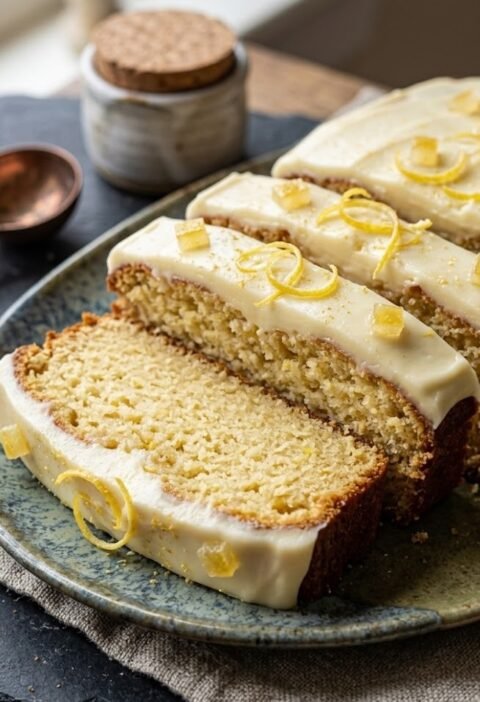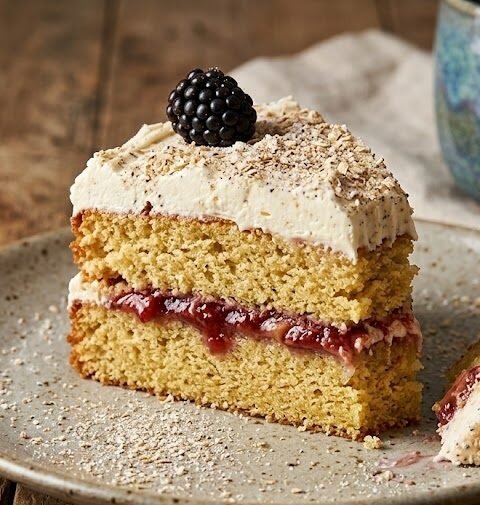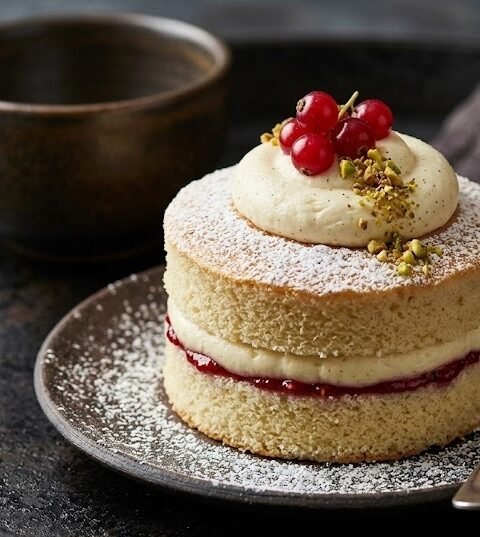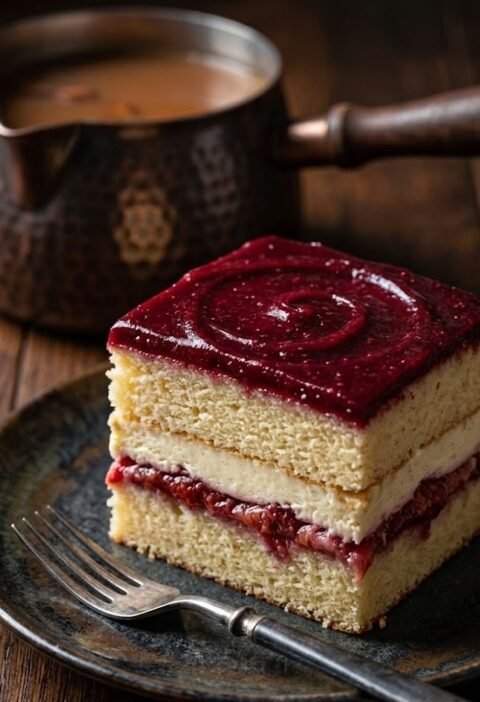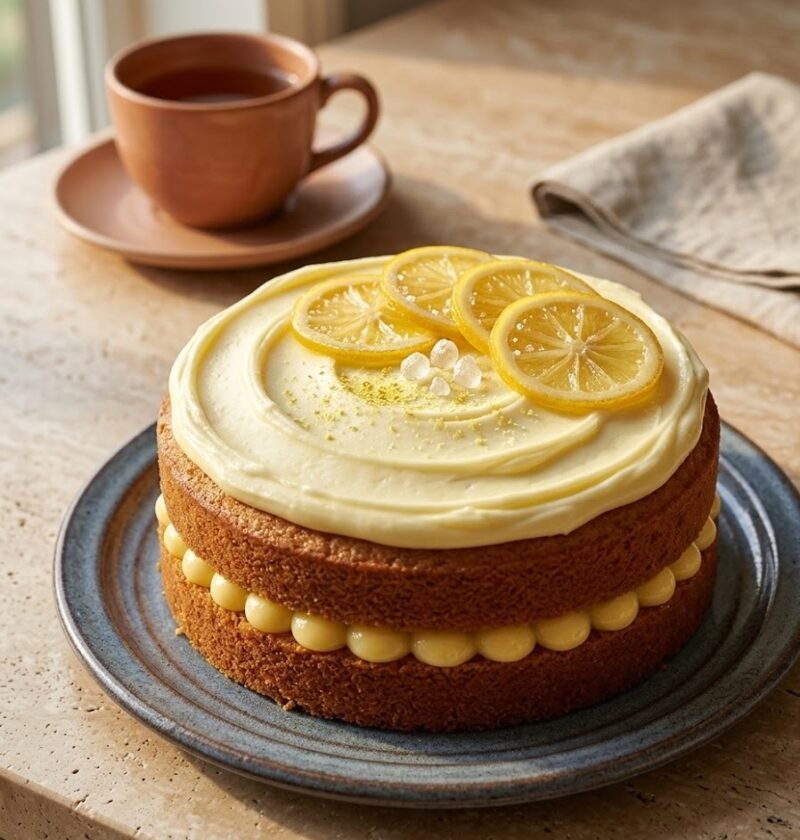
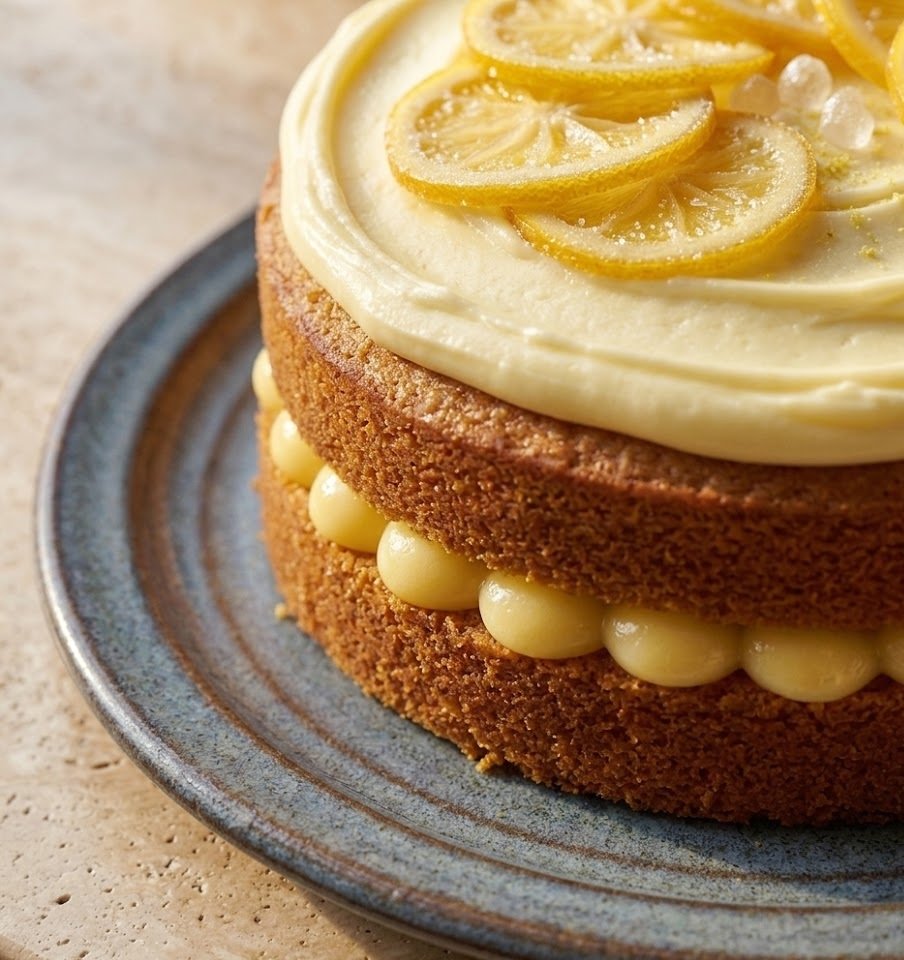
This Mary Berry Lemon Victoria Sponge is a bright, citrus-kissed twist on the timeless British classic, with two beautifully light sponge layers sandwiched together with zesty lemon curd and softly whipped cream. The texture is wonderfully tender and airy, while the flavour balances sweet vanilla with a refreshing lemon tang that cuts through the richness perfectly. It’s an easy bake suitable for beginners and seasoned home bakers alike, and the whole cake comes together in around 1 hour 15 minutes from start to finish. Whether you’re baking for afternoon tea, a birthday, or a weekend treat, this lemon sponge always delivers a soft crumb and a fresh, sunny flavour.
Ingredients
For the Lemon Sponge
- 225g unsalted butter, softened
- 225g caster sugar
- 4 large eggs, at room temperature
- 225g self-raising flour
- 1 tsp baking powder
- Zest of 2 unwaxed lemons
- 2 tbsp fresh lemon juice
For the Filling
- 150ml double cream, well chilled
- 1 tbsp icing sugar
- 4–5 tbsp good-quality lemon curd
For the Topping
- Icing sugar, for dusting
- Butter, for greasing tins
- Baking parchment, for lining
How to Make Mary Berry Lemon Victoria Sponge
- Prepare the oven: Preheat the oven to 180°C or 160°C fan. Grease two 8-inch round sandwich tins with butter and line the bases with baking parchment so the sponges release cleanly.
- Combine the ingredients: Place the softened butter, caster sugar, eggs, self-raising flour, baking powder, lemon zest and lemon juice into a large mixing bowl. Using all-in-one method keeps the sponge wonderfully light.
- Mix the batter: Beat with an electric mixer for about 2 minutes until smooth, pale and fully combined. Avoid overmixing once everything has come together to keep the crumb tender.
- Divide the mixture: Spoon the batter evenly between the two tins and gently level the tops with the back of a spoon or a small offset spatula.
- Bake the sponges: Bake on the middle shelf for 20 to 25 minutes until golden, well risen and springy to the touch. A skewer inserted into the centre should come out clean.
- Cool the cakes: Leave the sponges in their tins for 5 minutes, then turn out onto a wire rack and peel off the parchment. Let them cool completely before filling.
- Whip the cream: Pour the double cream into a chilled bowl with the icing sugar and whip until soft, pillowy peaks form. Stop as soon as it holds its shape to prevent splitting.
- Assemble the cake: Place one sponge on a serving plate, spread generously with lemon curd, then top with the whipped cream. Place the second sponge gently on top, pressing lightly so it settles.
- Finish and serve: Dust the top with icing sugar and serve straight away for the freshest taste, or chill briefly until ready to enjoy.
Tips for the Perfect Lemon Victoria Sponge
How do I stop my sponge from sinking in the middle?
Always preheat your oven fully and avoid opening the door before the 20-minute mark. Sinking is usually caused by an underbaked centre or sudden temperature change, so test with a skewer before removing.
Why is my sponge dense instead of light?
Dense sponges usually result from cold butter or overmixing. Make sure your butter is properly softened and mix only until the batter is smooth and pale.
How do I get the strongest lemon flavour?
Use freshly grated zest from unwaxed lemons and add a splash of lemon juice to the batter. The zest contains the most aromatic oils and delivers that bright, natural citrus flavour.
Can I use a stand mixer or hand whisk?
Both work beautifully. A stand mixer makes light work of the batter, while a hand whisk gives you more control to avoid overbeating.
Serving Suggestions
- Serve with a pot of freshly brewed Earl Grey or English breakfast tea
- Add a few fresh raspberries or blueberries on top for colour and freshness
- Pair with a scoop of vanilla ice cream for a simple dessert
- Drizzle a little extra lemon curd over each slice for added zing
- Present on a vintage cake stand for a beautiful afternoon tea spread
Storage Instructions
Room Temperature
If the cake is unfilled, store the sponges in an airtight container at room temperature for up to 2 days. Once filled with cream, it must be refrigerated.
Refrigerator
Store the assembled cake in an airtight container in the fridge for up to 3 days. Bring back to room temperature for about 15 minutes before serving for the best flavour and texture.
Freezing
Unfilled sponge layers freeze beautifully. Wrap each cooled sponge tightly in cling film and freeze for up to 3 months. Thaw at room temperature before filling and serving.
Nutrition Information
- Calories: 395 kcal
- Carbohydrates: 42g
- Protein: 5g
- Fat: 23g
- Saturated Fat: 14g
- Sodium: 180mg
Nutrition values are estimates only and may vary depending on the specific brands and quantities of ingredients used.
FAQs
Can I bake this as a loaf instead?
Yes, pour the mixture into a lined loaf tin and increase the baking time to around 45–55 minutes. Check for doneness with a skewer.
Can I use buttercream instead of whipped cream?
Absolutely. A lemon buttercream made with butter, icing sugar and lemon juice pairs beautifully and gives a more stable filling for travelling or warmer days.
Can I make my own lemon curd?
Yes, homemade lemon curd takes around 15 minutes and gives a fresher, more vibrant flavour than shop-bought versions.
Why did my cream split when whipping?
Cream splits when overwhipped. Stop as soon as it holds soft peaks and use cold cream straight from the fridge for the best result.

Mary Berry Lemon Victoria Sponge Recipe
Course: DessertCuisine: BritishDifficulty: Easy10
slices20
minutes25
minutes75
minutes395
kcal45
minutesLight, fluffy Mary Berry Lemon Victoria Sponge filled with zesty lemon curd and freshly whipped cream. A classic British cake with a bright citrus twist.
Ingredients
225g unsalted butter, softened
225g caster sugar
4 large eggs
225g self-raising flour
1 tsp baking powder
Zest of 2 lemons
2 tbsp lemon juice
150ml double cream
1 tbsp icing sugar
4–5 tbsp lemon curd
Icing sugar, for dusting
Butter, for greasing tins
Directions
- Preheat oven to 180°C (160°C Fan). Grease and line two 8-inch round cake tins with baking parchment.
- Place butter, caster sugar, eggs, flour, baking powder, lemon zest and lemon juice into a large bowl.
- Beat with an electric mixer for about 2 minutes until pale, smooth and fully combined.
- Divide evenly between the tins and level the tops.
- Bake for 20–25 minutes until golden, springy and cooked through.
- Cool in tins for 5 minutes, then turn out onto a wire rack to cool completely.
- Whip the double cream with icing sugar until soft peaks form.
- Spread lemon curd on the bottom sponge, top with whipped cream and sandwich with the second sponge.
- Dust with icing sugar and serve immediately or chill until ready to enjoy.
Notes
- Ensure butter is fully softened for best rise.
- Do not open the oven door early to prevent sinking.
- Sponge layers can be frozen unfilled for up to 3 months.